JESUS PROGRAMMED ADAM AND EVE
When Adam was created, Jesus programmed his physical brain and downloaded different programs to run the complex physical body. Unlike our modern computers, the programing was carried biologically with deoxyribonucleic acid – also known as DNA – the molecule that stores genetic instructions. Proteins are made from the instructions in DNA and do most of the work in cells.
 Most of mankind’s discoveries came into the 20th century, especially from the Human Genome Project (HGP), which was a massive international scientific effort – twenty-three years in total – to map and understand all the genes in human genome. We learned that the genome is a complete set of DNA instructions, made up of about 3 billion base pairs. These instructions are split across 23 pairs of chromosomes, and contain about 20,000–25,000 genes that code for proteins. The knowledge gained has transformed biology and medicine, helped us understand genetic diseases, and even how cancer works.
For all the prowess contained by the physical brain, Jesus did not program it to be able to operate on its own; it was simply a computer designed to run the bodily functions. The soul body with its brain is the real person; with it we can reason and communicate with other humans In contrast, when we are born again, our dead spirit is resurrected, and this is what is used to communicate with God. The soul and spirit are taken to heaven and continue to exist after the physical body dies.
The soul brain is an advanced computer that has been programmed by Jesus to think and engage in mental activities such daydreaming, remembering past events, imagining future scenarios, forming ideas, problem solving, and decision making. You are thinking when you imagine what to have for dinner, recall a vacation, or picture how your room would look painted sky blue.
The soul brain can also reason, which is a specific type of thinking that involves logic and evidence to draw conclusions or make decisions. Look at the following examples:
1) Applying general rules to reach a specific conclusion as with deductive reasoning.
a) All humans are mortal. → Adam was a human. → Adam was mortal.
2) Using specific observations to form general rules as with inductive reasoning.
a) Every swan I’ve seen is white. → All swans are probably white.
3) Inferring the best explanation based on evidence as with abductive reasoning.
a) The grass is wet. → It probably rained.
You’re using reasoning when you weigh the pros and cons to make a decision, solve a puzzle, or argue a point logically.
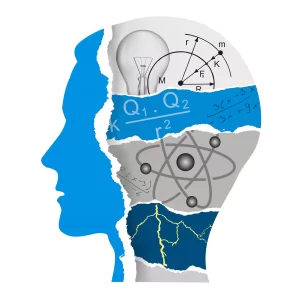 Thinking is a broad mental activity whereas reasoning is focused and logical. The goal of thinking is to explore, imagine, and recall, but the object of reasoning is to draw conclusions and solve problems. Thinking incorporates emotions, memories, and imagination, while reasoning features logic, analysis, and evidence.
Jesus created Adam and Eve as adults; they were never children. The Son of God told them what they were to do and not to do. Adam’s job was to maintain the Garden of Eden. He was told what he could eat; it was all good for food except for the fruit from the Tree of Knowledge of Good and Evil.
Eve did not receive direct instructions from Jesus, but had to rely upon Adam to pass the information along to her. They also received partial information about the creation. Basically, the first two chapters of Genesis is all they knew.
Adam and Eve lived independently in the Garden of Eden and used the knowledge they had been given to make daily decisions. When Lucifer showed up in the form of a serpent to tempt Eve, instead of being obedient, she tried to reason with a master manipulator and the lost the battle of wits due to her limited knowledge. Adam was the bigger fool. He was not deceived; he made a conscious decision to choose Eve over his close relationship with Jesus.
SOUL BRAIN AND A COMPUTER
When a born again person uses his soul brain and his spirit, he is able to think clearly, draw sound conclusions and think about future actions. However, the amount of stored knowledge will determine the capacity of his ability to draw sound conclusions. Let me provide with an example. A Christian who refuses to read the Bible will have difficulty to withstand demonic attacks since his database is empty. The same holds true for a computer, it is only as good as its hardware and software.
The soul brain is slow in computing when compared to personal computers. The soul brain basically stores all personal events that have taken place from birth to death. It also amasses what a person has studied over the years, but it is not like a personal computer that can store huge amounts of data.
It is obvious that when Jesus created mankind, He limited the capacity of the soul brain. The Son of God showed great concern when He saw the people building the Tower of Babel to reach heaven. The Creator did not want the human race progressing to a higher technological stage at that time, and in order to put the brakes on the project, He replaced the Adamic language with thousands of languages and then moved humanity to the corners of the earth.

Engineers, scientists, and governments for the past 5,900 years have hired people to do computing when it came to the design and navigation of ships, plotting the orbits of the planets and stars, and conducting censuses of populations in different nations.
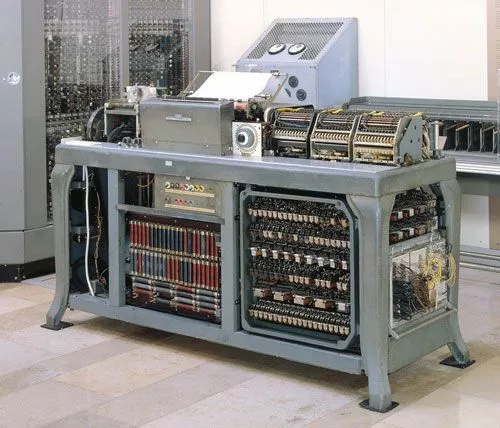
The big change came in 1890 when the U.S. government used Herman Hollerith’s punch card tabulation machine to complete the census. In order for it to even be possible, mankind first needed to discover electricity, along with how to manufacture and use it. International Business Machines (IBM) developed the tabulating system and eventually these machines were used to perform calculations for payroll, statistics, and people control.
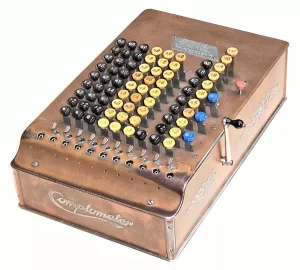
The comptometer was introduced in 1887, it was a mechanical – later electromechanical – calculator used primarily for fast arithmetic, especially addition and subtraction. It accelerated engineering design and made it easier and faster to perform calculations before the advent of CPUs and spreadsheets.
The big break came in 1947 when Lucifer allowed the military to retrieve a crashed UFO outside of Roswell, New Mexico. The human race encountered a superior technology that over time gave birth to personal computers, smartphones, the internet, and much more through reverse engineering.
The human race moved into the computer age, which accelerated design and production. What a soul brain could not do, is now being done seemingly effortlessly by the CPUs and GPUs of modern computers. The speed at which we design airplanes, ships, rockets, etc. with computers is much faster than if done manually with just the soul brain.
The Bible does not reveal whether the soul brain will have a greater capacity in heaven; all we know is that our soul/spirit will be taken to heaven when the physical body dies.
As the knowledge of mankind has increased tremendously, we are able to build faster and more advanced computers.
ARTIFICIAL INTELLIGENCE
As I stated earlier, artificial intelligence (AI) refers to the development of computer systems that perform tasks which typically require human intelligence such as understanding language, recognizing images or speech, making decisions, learning from data (also called machine learning), and solving problems or planning actions. They do these tasks efficiently and effectively, empowering a wide range of products and services.
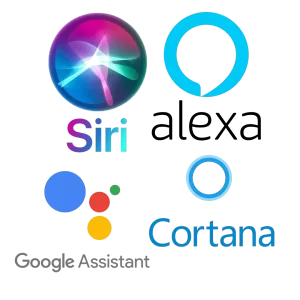 Virtual assistants like Siri (Apple), Alexa (Amazon), Google Assistant, and Cortana (Microsoft) rely heavily on AI to understand, process, and respond to voice commands. Utilizing natural language processing and automatic speech recognition, the assistant listens to your voice, converts it into text, and identifies what you are saying.
For instance, once your words are converted to text, the assistant analyzes them to determine your intent such as a request for weather update or setting an alarm, or whether the user is seeking details such as time, location, and/or date. The assistant can be used for task execution to activate an app (music, timer) or controlling a smart device (lights, thermostat). The AI incorporates machine learning so that over time the assistant learns your preferences, speech patterns, frequently asked questions, and daily habits, becoming more personalized the more you use it.
Conversations are personalized with contextual AI to remember what you said earlier, so that if you asked about Abraham Lincoln, and later use the pronoun “he” to refer to Lincoln, the AI knows who the “he” is and will answer accordingly, making conversation with the virtual assistant feel more natural.
 AI can be teamed up with algorithms to make suggestions based upon what you have watched on Netflix or listened to on Spotify. Machine learning is used by Netflix to analyze your viewing history, time spent on each title, genre preferences, and what you watched again or stopped watching. Netflix will show thumbnails for the same movie based upon your interests and the AI will even test which images get the most clicks and adjust accordingly. AI is used to analyze viewing data to help Netflix make decisions on what kind of movies/shows to produce and what content to renew or cancel.
Spotify uses AI to analyze songs played, incorporating tempo and genre, along with listening habits such as time of day, location, and activity. AI listens to the music to understand rhythm, harmony, key, mood, and determines whether the song is happy, sad, energetic, etc. This allows Spotify to match you to music that fit your mood and/or style, even from previously unknown artists. Spotify integrates with a voice assistant to understand commands such as “Play acoustic Christian.”
Chatbots on websites are used to simulate human conversation. They are used to automate interactions, save time by answering frequently asked questions, schedule appointments, and improve customer experience. Simple bots use pre-set scripts, but advanced ones use natural language processing to understand and respond more intelligently.
AI plays a central role in making self-driving cars work. These vehicles rely on artificial intelligence to see, think, and act – just like a human driver – but with sensors and software instead of eyes and instincts. AI helps the car understand what is around it by processing data from cameras to recognize lanes, signs, lights, and pedestrians; lidar incorporates laser scanning to detect distances and objects; radar detects moving vehicles; ultrasonic sensors detect curbs and nearby objects.
The AI uses these forms of perception to decide where to drive, when to change lanes, how to react to traffic lights, stop signs, and pedestrians. Each car utilizes the machine learning incorporated from millions of miles of driving data to steer the wheel, accelerate, brake, and signal turns.
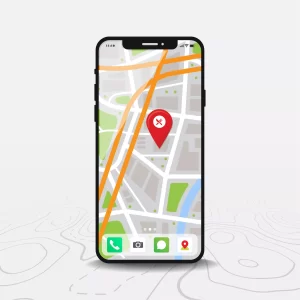 Artificial intelligence plays a crucial role in Google Maps to predict traffic and suggest the fastest routes. It helps the app do much more than show you a map; AI allows it to think, adapt, and respond in real time. It accomplishes the task by aggregating GPS signals from smartphones to read speed and movement of vehicles on roads, historical traffic data such as patterns over days, weeks, and years, and incorporating road sensors, satellite data, and accident reports. Machine learning allows the AI to predict how traffic will flow and account for rush hour slowdowns, accidents, construction delays, and inclement weather.
Banks use artificial intelligence to detect patterns that suggest identity theft or fraud such as a spending in two different locations at once and the system may send a text to your cell phone asking to confirm a purchase deemed suspicious. Another use would be how traditional credit scoring uses limited info (credit reports, income, etc.), but AI can analyze spending data, bill payment patterns, and predict the risk of a borrower defaulting. This potentially enables faster, fairer, and more accurate lending decisions.
Walmart uses artificial intelligence to track inventory in real time using smart cameras, shelf sensors, and barcode scanners to predict when an item will run low and triggers a restock order. AI is used to forecast the demand for seasonal and regional products, optimize shipping routes and reduce delivery times, and manage supplier performance and flow of inventory. Walmart’s website uses AI to make product recommendations, customized search results based upon browsing and purchase history, personalized ads and promotions, and chatbots to track orders and answer product questions. AI also monitors competitor’s prices and adjusts Walmart’s pricing in real time to stay competitive.
The aforementioned examples serve to show that artificial intelligence is the theory and discipline of programming computer systems to learn from and spot patterns in data sets. These advanced algorithms and models perform human tasks, like recognizing speech or images and making decisions. AI relies on machine learning1 and neural networks2, as well as deep learning3, and natural language processing.4
Artificial intelligence must be programmed by a human and have access to data from which it can extrapolate to reach conclusions. Since AI is not a human, it cannot gather information unless it is connected to a database. The largest such example would be the world wide web. An AI computer will exhibit the morality of the person programming it. If the programmer has Christian values, the AI computer will demonstrate Christian values.
ChatGPT is the most popular AI chatbot right now and studies have shown that it demonstrates liberal bias in its responses. This is the nature of artificial intelligence; it reflects the moral attributes of its creator. AI is an image bearer that will always reflect the characteristics of the person who designed it. This fact is displayed at the beginning of the Bible.
MANUFACTURING
Artificial intelligence is being used in manufacturing today to monitor machinery in real time through the use of sensors and predicts when a machine is likely to fail or need service thereby reducing downtime, lowering repair costs, and preventing production delays. In the end, AI ensures timely delivery while avoiding overstock and shortages.
AI systems analyze production data to optimize workflows, reduce waste, and improve energy usage. They also predict demand for products, inventory needs, and logistic bottlenecks. AI tools speed up innovation by simulating how products will perform before they are built.
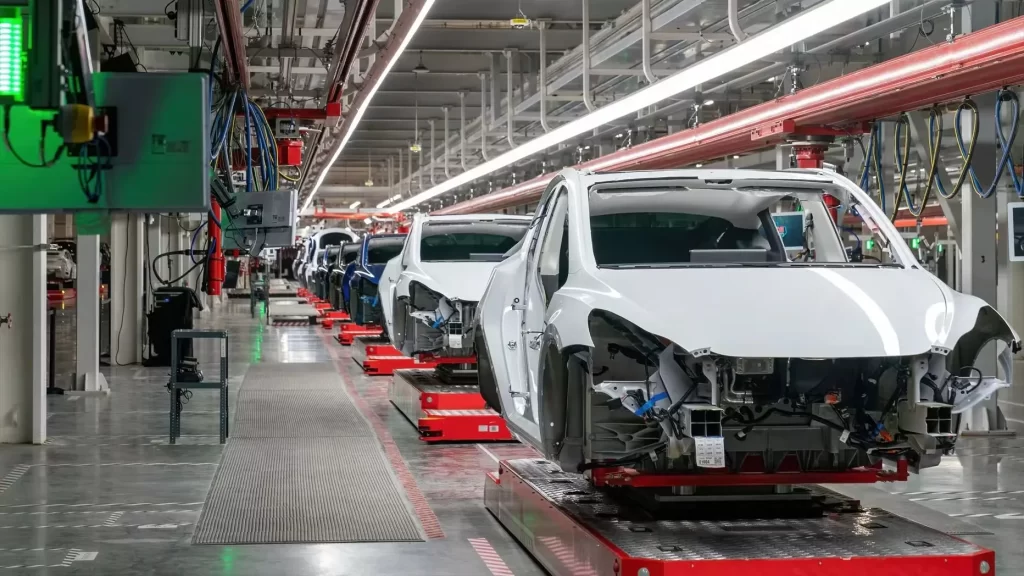
Tesla uses thousands of robots and AI-controlled machines to build vehicles. Robotic arms are used for welding, painting, and assembly. Tesla is able to adapt to production changes in its five models without the need for reprogramming. Quality control is carried out by AI to inspect for dents, paint flaws, and misaligned parts; many of these things are hard to detect with the human eye. Data collection does not just come from lab tests, but with customer use, and the factory will adjust if reoccurring issues are discovered to optimize the manufacturing process.
CUSTOMER SERVICE
Artificial intelligence is also being used for customer service. The seller of certain products no longer provides a human voice, but an automated computer system that makes it more difficult to reach a human being. This AI can answer common questions about orders and tracking. Additionally, it can make account changes, issue password resets, and handle appointment scheduling.
Natural Language Processing allows the AI to understand and interpret human language to detect customer intent, sort each call into a category, and understand sentiment of the caller as to whether they are frustrated, confused, or happy. This allows the call to be routed to the correct department and prioritizes urgent issues.
Once the caller connects to a human being, an AI call center assistant helps the human agent by pulling up customer data. The AI transcribes and analyzes conversations in real time, suggesting responses and improving the quality of the call. The AI also examines past interactions to anticipate problems before they occur and works to suggest solutions in a proactive manner, allowing a company to fix a problem before the customer even brings it up.
Artificial intelligence can offer multilingual support by translating inquiries in real time. For instance, a French caller to an American company can be understood by the AI and receive a response in his native language. The AI can even respond with a variety of different languages, making international support possible for companies.
SURVEILLANCE
Most people are used to the fact that large companies and government agencies utilize camera surveillance systems manned by human operators. It is not unusual for office buildings hosting multiple businesses to feature passive surveillance systems in which video footage can be accessed if a crime is committed. Even simple home surveillance camera systems have become relatively common in the United States and AI has transformed just recording footage and/or sounding alarms.
The advent of smart cameras with object recognition uses artificial intelligence to analyze video in real time to detect and differentiate people, vehicles, and animals. It can recognize the faces of family members and ignore harmless movement from wind, reducing false alarms, so that the only alerts sent out are the real ones.
When paired with smart locks, facial recognition identifies who is at the door and automatically unlocks for trusted individuals based upon the AI facial analysis.
Using audio detection, the AI can recognize specific sounds such as glass breaking, smoke alarms, and listen to the tone of the conversations to detect aggression. The AI learns the patterns of the homeowner so that it knows when you are home or away. Additionally, it begins to analyze activity that is categorized as normal versus abnormal. AI security systems can work with smart lighting, smart locks, and smart thermostats, creating a fully connected home that automates tasks and serves as an intelligent home security system.
CHINA’S ORWELLIAN SURVEILLANCE
China uses a massive AI-powered surveillance and facial recognition system, making it one of the most advanced and intrusive surveillance systems in the world. Each person must register their face with a government database so that cameras in the streets, subways, airports, schools, and shopping centers can identify suspects, track fugitives, and locate missing people under the guise of national security.
 More than six hundred cities in China use AI to monitor traffic and pedestrian movement, scrutinize suspicious behavior, and respond to emergencies through 24/7 surveillance. The AI does not just identify faces, but it can track an individual across multiple camera feeds, going so far as to trace where a person has been over the course of several days or weeks. This analysis of movement allows the communist party to examine the patterns and habits of individuals for political control.
The Uyghur Muslims in northwestern China are being ethnically profiled and oppressed by the government. There are cameras outside of their mosques, schools, and homes to monitor the activities of the Uyghur. Additionally, there are checkpoints which require facials scans and iris scans to pass through. The extreme measures even include the Uyghur phones being scanned for “banned” content. The AI is flagging people based upon appearance, behavior, and religious practices. This type of predictive policing is a violation of the basic rights Uyghur’s have as human beings.
It gets worse. China has begun experimenting with a social credit system. It works by tracking the surveillance feeds for the relatively benign behavior of jaywalking, to the more serious shoplifting, or what communist party deems even worse – spreading “misinformation.” Infractions can lead to travel bans, slower internet speeds, and public blacklists based on their behavior. The AI can punish humans by displaying their faces on public screens. The AI can identify people through facial recognition to issue misdemeanor violations and fine people automatically for jaywalking, littering, or smoking in public. This effectively blends surveillance with public shaming and automation.
MILITARY USE
Artificial intelligence plays an increasing significant role in the various branches of the military as AI is being used to process data satellites, drones, cameras, and sensors to identify vehicles, weapons, buildings, and people of interest. Human analysts are not able to work at the speed of AI, thereby saving time and the work is carried out much faster.
AI now controls unmanned aircraft, ground vehicles, and submarines for patrols, supply transport, target tracking, and combat support. This method reduces risk to human soldiers in dangerous environments and avoids loss of life.
Cyber warfare is reality as various nations and groups actively seek sabotage the United States of America. AI is able to detect, block, and respond to cyberattacks in real time to protect military communication systems, defense networks, satellites, and other critical infrastructure.
AI is being utilized to analyze battlefield data to recommend strategies, simulate enemy actions, and help commanders make smart decisions quickly. This improves mission planning and training, enabling the military to be more effective with limited resources.
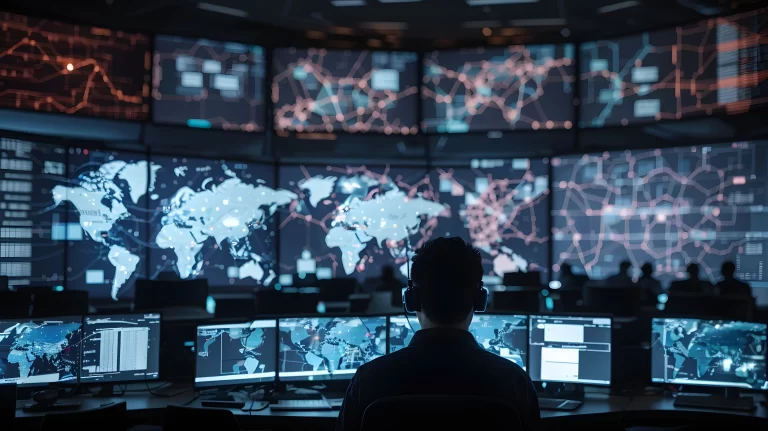
 AI assists fighter pilots by acting as a copilot, analyst, and tactical advisor. All the data from radar, infrared, GPS, and camera feeds is monitored by the AI to provide the pilot with situational awareness so he can instantly understand the threats, terrain, and targets without be overwhelmed by the raw data. Artificial intelligence identifies enemy aircraft, missiles and ground targets, and makes suggestions as to which targets should be prioritized.
The AI can lock onto to targets, automatically adjust firing solutions, and guide the munitions during the engagement. It offers real-time advice if a missile is incoming and can automatically deploy flares, chaff, and engage in evasive maneuvers. Wingman drones flying alongside are controlled by the AI to scout ahead, engage enemies, and defend the manned aircraft. When in control of the flight system, the AI can respond more quickly to changing conditions when it comes to engine performance and aerodynamics than the pilot.
RUSSIA-UKRAINE WAR
The Russian invasion of Ukraine started three years ago. Drones are now playing a crucial role, marking the first time they are central to battlefield tactics. They are being used for reconnaissance to provide real-time video feeds of enemy positions and adjust artillery fire with extreme accuracy. Even small commercial drones like the DJI quadcopter are being used for scouting.
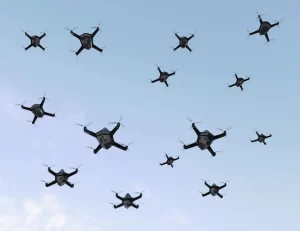 The low-cost strike ability of suicide drones is being utilized by both sides to destroy vehicles, artillery, and troops. No loss of human life means a drone operator can loiter in the air, waiting for a target of opportunity to appear, without fearing for his own life.
The Ukrainians are making use of groups of autonomous drone swarms to work together like a team, coordinating their movements and actions through the use of artificial intelligence, eliminating the need for human control. The swarm works together, sharing information, adapting as a group to complete the mission.
When it comes to scouting and surveillance, a swarm can spread out to cover large areas quickly or focus on a point of interest. The AI can identify targets, track vehicles, and map out the enemy terrain. Air defenses can be attacked from multiple directions simultaneously. Even if some drones are shot down, others will still reach the target, allowing for fairly cheap high-impact strikes. Drone swarms can also jam radar and communications, confuse targeting systems, and act as decoys.
The AI helps the drone navigate and avoid obstacles, share data, and react to real-time changes such as choosing a replacement leader if a drone fails. The AI allows the drone swarm to split up tasks such as mapping terrain, scanning for threats and targets, making the swarm fast, flexible, and resilient when a loss occurs.

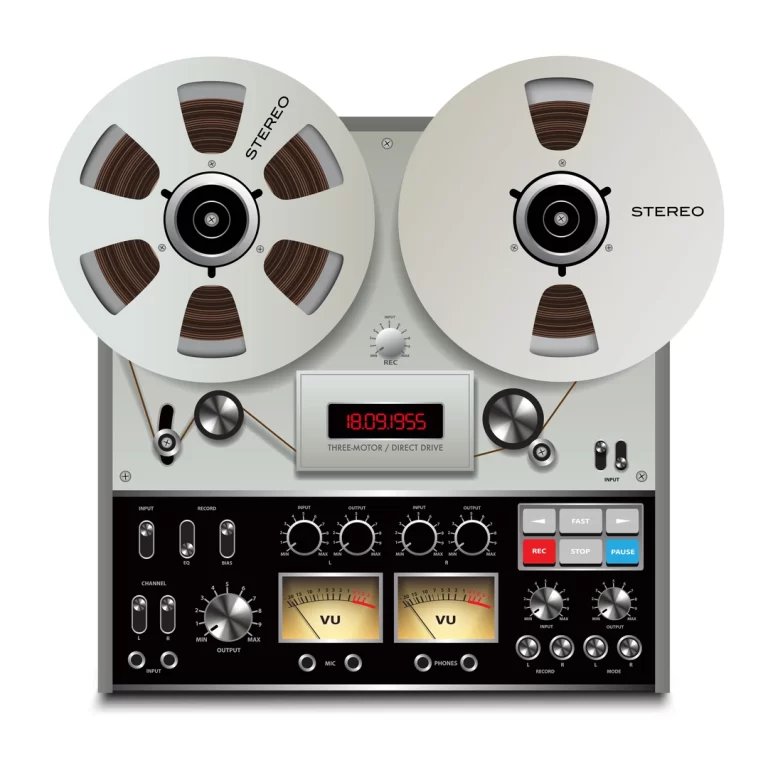
Reel-to-reel tape recorders were replaced in the early 1970s with the smaller, more compact, self-contained cassette tapes. This evolution of audio was revolutionary and then the cassette player was replaced with the higher fidelity eight-track format. However, this trend did not last long because compact disc players took the market by storm.
The format was remarkable because it did not require rewinding, was durable, and featured better sound quality because it was a digital format and therefore did not have any tape hiss. The advent of mp3 players, digital downloads, and streaming platforms in the 2000s replaced CDs, vinyl records, and cassettes. Record and cassette players today are now a novelty, and CD players are becoming increasingly scarce in the market.
The internet was developed by the Department of Defense in 1969, connecting four universities (UC Los Angeles, Stanford Research Institute, UC Santa Barbara, and University of Utah) to test new ways of linking computers for scientific and military research. This forerunner is considered the earliest version of the internet and paved the way for what exists today. The introduction of the world wide web in 1990 with its URLs, web pages, and web browsers made the internet usable by the public.
In the late 1980s came the first personal computers. They could do word processing in a way that completely replaced the typewriter, basic accounting, inventory tracking, and data analysis. Music and sound were primitive on these early computers, but they could do basic games and some drawing and design. Their real power lay in their ability to communicate and share information. Users shared floppy disks and connected to bulletin board systems, CompuServe, and AOL via dial-up modems. These were the first steps toward instant messaging, email, and the modern internet.
The Soviet Union launched the first satellite in 1957, inadvertently launching a space race that has spawned a lot of competition. It is estimated that more than 9,000 satellites orbit the earth, most of them in a low earth orbit. Elon Musk’s SpaceX Starlink has launched over 5,000 satellites to create a dense network to support its global high-speed network and ensure that there is continuous signal for Starlink users anywhere on earth.
The military uses satellites to perform surveillance, navigation, communication, missile detection, and cybersecurity support. Due to the secrecy of the military, it is estimated that the US military operates 239 satellites, China has more 500, and Russia has about 105 of its own. More than ninety countries and companies operate satellites today, and in addition to the 2,000 inactive satellites, there are tens of thousands of pieces of space debris such as rocket parts and fragments floating in orbit around the planet.
Television broadcasts began in the 1940s and ten years later it was not uncommon to find out in every middle-class home. Color televisions became mainstream by the 1970s and people liked it better because it was more visually appealing. The introduction of video cassette recorders (VCR) allowed television shows to be recorded for later viewing and pioneered the concept of home movie viewing. The CRT televisions were replaced by projection screen, which in turn were replaced by LCD, Plasma, and LED displays. The television screen sizes continued to grow larger, image quality became sharper, and now it not uncommon for a television to be only an inch thick. Smart televisions connect to the internet, and with the help of voice assistants like Alexa and Google Assistant, can offer personalized recommendations to stream video content from providers like Netflix, YouTube, Hulu, and Prime Video.
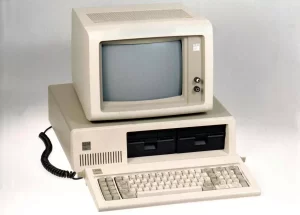 Like the early CRT televisions, personal computers were bulky and not particularly powerful in processing. Early machines were large, expensive, and limited in ability; whereas, modern PCs are compact, powerful, and affordable. The personal computers of the 1970s were mainly for hobbyists and engineers.
The 1980s saw a rise in consumers for home use as floppy drives were added for storage. The real boom took place in the 1990s when personal computers became mainstream in homes, schools, and with businesses. The 2000s saw the introduction of laptops as PCs became portable enough for media, gaming, and video editing. The evolution continued in the 2010s as computers continued to grow smaller and more powerful.
The computers being produced today now feature an integration of artificial intelligence into the hardware (NPUs, GPUs and CPUs), allowing machine learning to take place locally, improving AI performance with less battery use and greater privacy since it is not relying upon the cloud. AI is also embedded in the operating system in the form of a personal assistant, office software with smart writing, speech-to-text, auto suggestions, and data analysis; AI powers image editing, facial recognition, object removal, and video effects.
The tools adapt to the user’s behavior and help streamline repetitive tasks. AI helps modern PCs defend themselves from cyberattacks and unauthorized access through the use of biometric authentication (face, voice, fingerprint) and behavioral threat detection such as unusual activity. Battery life, heat control, and speed are monitored by the AI to improve its performance. If the user is browsing or gaming, its operation will be adjusted accordingly, habits are studied to pre-load commonly used software, and predictive models are used to implement efficient resource management.
The first tablets were clay writing slabs used over 5,000 years ago, while the digital tablets began emerging in the late 20th century. The first modern tablet was introduced in 1989. It was a far cry from the tablets of today which are capable of drawing, photo editing, video editing, note taking, document editing, reading ebooks, browsing the web, social media, smart home control, and streaming videos.
BEEPERS AND PHONES
Pagers became popular with doctors and businessmen in the 1980s because it allowed them to receive a short message such as a callback number or a numeric code. The recipient found a landline – even a pay phone – to call the person responsible for the page. It was a one-way device by which a family member, friend, or colleague could reach out once the person with the pager had left home or the office and was otherwise unreachable. The usage of pagers exploded in popularity with teenagers in the 1990s as a status symbol. However, pagers declined as mobile phones took over with their full voice and text ability.
The first cell phone was released by Motorola in 1983. It was large and came to be known as a car phone or briefcase phone because of its size and usage. The range of the 1G network was limited, coverage was spotty, and calls were expensive. Continued research saw mobile phones go mainstream in the 1990s as they became smaller, more portable, and cheaper. This was the era of 2G network, the first flip phone, and texting became a cultural phenomenon. The 2000s introduced 3G networks and the first smartphones, which in reality were pocket computers capable of calls, texting, email, web browsing, and basic apps. The 2010s saw the dawn of 4G networks which supported fast data.


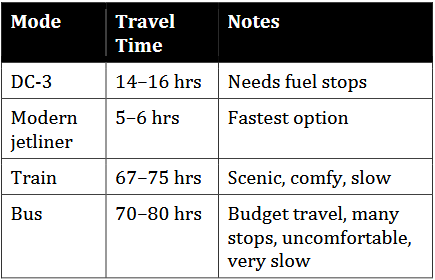 Congress passed what became known as the “Air Mail Act of 1925” and the official title of the bill was “An Act to encourage commercial aviation and to authorize the Postmaster General to contract for air mail service.” Up to this time, few people utilized the private companies that offered air travel; however, the infusion of cash from the United States Postal Service, which contracted with carriers to provide air service for the delivery of mail, made it possible for private companies to invest in airplanes.
Airplanes did not have pressurized cabins from 1927 to 1941, which forced the pilots to fly at low altitudes at a max speed of 200mph. The cabin was cold, loud from the noise of the engines, and turbulence which knocked the airplanes about caused airsickness. The following companies produced airplanes:
• Ford produced the Trimotor Airliner which initially only carried ten passengers, but later models bumped the number up to seventeen.
• The Boeing 247 had a capacity of ten passengers.
• The DC-2 in 1934 seated fourteen passengers. Two years later the famous DC-3 featured 21-32 passengers, depending upon the configuration of the cabin.
•Lockheed’s 10 Electra was produced in 1934 with a capacity for ten passengers.
Flying coast-to-coast was expensive and a round-trip flight was a luxury experience. When adjusting for the price of inflation, the ticket price of $260 in 1934 would cost $5,900 in today’s money. The average weekly wage was $30-35 and the $260 represented 8-9 weeks of pay because laborers typically earned $0.25 to $0.40 per hour. Compare that with the $505 price tag of an automobile during the same period.
The different airlines carried 6,000 passengers in 1929, but that number rose to 450,000 in 1934, and more doubled in 1938 with 1.2 million. However, the majority of the American public continued to use buses and trains. Compare this with 2024, when millions boarded flights, with an average of 2.33 million passengers per day.
WORLD WAR II
It has been said that necessity is the mother of invention; war is also a factor that drives invention and speeds up production of equipment used on the battlefield. In 1934, the U.S. Air Corps (forerunner to the US Air Force) began seeking a bomber that could fly from California to Hawaii, as well as Panama to Alaska.
The DC-3 fell short of the 2,500 miles with its range of 1,600 miles and cargo capacity of 6,000 pounds. Boeing engineers came up with a design that featured four propeller driven engines. The B-17 featured range of 2,000 miles, top speed of 287mph, maximum cruising altitude of 35,600 feet, and 8,000 lbs. payload. The ten-man crew wore heavy clothing to withstand the extreme cold at the high altitudes. When the U.S. entered the war in 1941, the B-17 served as its main bomber and 12,700 were built in Seattle.
Engineers at Boeing began working on a new long-range bomber with more capacity. The B-29 would go on to serve as the prototype for civilian airliners after the war ended. It featured four







ROLE OF AI IN CHESS
In 1956 a workshop was held at Dartmouth College in Hanover, New Hampshire, where the concept of artificial intelligence was discussed and the possibility of developing it. Over the years much money has been invested by governments to create AI, but the problem they faced was that the computers were not powerful enough.
 Chess is a two-player strategy game that has been played for over a thousand years. It’s known for its complexity, requiring tactical skill, and strategic planning. Chess is also both a recreational game and a competitive sport, played casually, in tournaments, and at the highest level by grandmasters and computers.
A chess-playing system was developed and IBM’s Deep Blue challenged Garry Kasparov in 1996 and in 1997 to a pair of six-game matches. This supercomputer used brute force computing, advanced heuristics, and was programmed with Kasparov’s previous games to better predict his strategies.5 Kasparov won the first encounter (4–2), but lost the rematch (2.5–3.5) and he subsequently accused IBM of cheating. However, Deep Blue’s win showed that artificial intelligence was catching up with human intelligence and it had the ability to defeat a champion like Kasparov.
The AI boom started around 2010 and refers to the rapid growth, investment, and advancement in artificial intelligence technologies that has fundamentally reshaped industries, research, and daily life. It began with breakthroughs in machine learning and deep learning, and lead advances in image recognition, natural language processing, recommendation systems, and more. What lies ahead? Systems that understand and generate text, images, audio, and video together. Models that can plan, act, and adapt autonomously.
DEVELOPMENT CANNOT BE HALTED
When I attended engineering college in 1959, we used slide rulers to perform mathematical calculations, but most of our computations were done by hand and we were ignorant of electronic calculators. It has been 62 years since I earned a degree in mechanical engineering and the technology has advanced so significantly that I have watched the world transformed. The era I grew up in no longer exists.
 The comic books of the 1950s featured a detective named Dick Tracy who worked in a gritty city filled with gangsters and corrupt officials. He was known for a trademark yellow fedora and trench coat, but what really set him apart was the wrist watch that also served as a two-way radio. It was later upgraded to a video watch and Tracy’s exploits with technology captured my imagination. Chester Gould, the author, created a story that was so far-fetched that Dick Tracy’s watch could not possibly be true. And yet here we are decades later with hundreds of millions of users wearing a form of this incredible device.
Smartwatches do much more than just tell time. They are mini-computers mounted on the user’s wrist. When connected via Bluetooth to a smartphone, it can show notifications for calls, texts, email, and app alerts. The smartwatch monitors the heart rate, blood oxygen, and fall detection; it also counts steps, allows for workout tracking, and controls music playback and the phone’s camera. Smartwatch connectivity to AI voice assistants gives it the ability to set alarms, reminders, and calendar events. And because the screen is LCD, users can change the watch faces depending upon their mood or need.
The difference between a soul brain and an AI computer is primarily the storage of data and the speed at which it processes data. Computer chips become smaller and more powerful each year and the future computers will have greater capacities that surpass what we have today. Profits are what drive the people in the business world. AI will make it possible to phase out more and more people. Most super markets have self-checkout system where the customer uses a computer system to scan their products and then pay with a credit or debit card.
When you try to call a bank or a business to discuss problems, you are talking to an AI computer system that will try to solve your problem. It can be difficult to bypass the computer system and talk to a live human agent.
Mankind is being driven by the forces of Satan, who are working overtime to build a worldwide control system that will be used to control every human on the planet. We are getting closer to the Beast system that Jesus warned about.